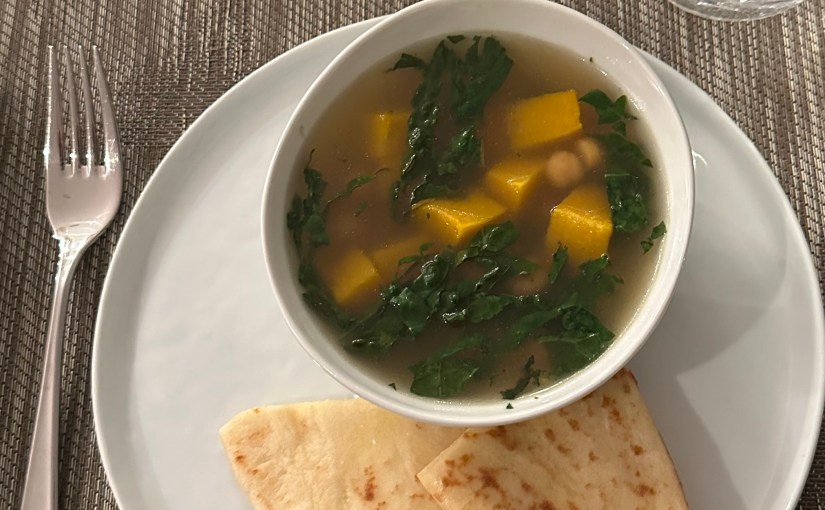
Roasted Squash, Kale and Chickpea Soup

This is an easy weeknight soup that is packed with both fiber and nutrients. The recipe makes enough for 2-3 servings but can easily be doubled or tripled.

Ingredients

1 quart unsalted or low salt vegetable or chicken stock

3 medium garlic cloves crushed

½ onion chopped into 3-4 pieces

½” knob of ginger peeled and cut into 2-3 pieces

1 t. turmeric

kosher salt and fresh ground pepper to taste

1 medium butternut squash peeled, seeded and cut into ¾” cubes

1 T. olive oil

2 t. cumin powder

1 medium bunch of lacinato kale, large ribs removed, washed and cut into ½” ribbons

10 ounces of cooked chickpeas (if you can find them in a glass jar rather than a can or paper packaging, they tend to be higher quality and fresher. Whole Foods carried the jovial brand in glass jars)

Hot sauce (optional)

PREPARATION

  1. Preheat oven or toaster oven to 365°F.
  2. Place the stock, garlic onion, ginger and turmeric in a pot large enough to accommodate all the ingredients. Simmer the stock over medium heat for 15-20 minutes (adjusting the heat to keep the soup from reaching a rolling boil), until the garlic and onions have become soft. Using a slotted spoon remove the onion, garlic and ginger from the stock and discard.
  3. Taste the stock and add salt and pepper to taste
  4. While the stock is simmering, toss the butternut squash cubes, olive oil and cumin together in a bowl. Place the squash on a baking pan and roast until tender with some browned bits on a few edges (about 15-20 minutes).
  5. When squash is done, bring the stock back to a simmer and add the kale, stir and allow to cook for 2-3 minutes. Add the chickpeas and the squash and stir to combine.
  6. Check seasonings again and, if desired, add hot sauce to taste to make the soup a bit spicier.

Perfectly cooked chicken breast (with or without crispy skin)

Chicken breast is a wonderful healthy protein, but it so often dry and tasteless that many people shy away from it. Getting chicken breasts perfectly cooked, however, requires little time and not much in the way of special equipment–all you really need is an instant read thermometer and some parchment paper. 

Th technique is simple, preheat an oven (whether regular or toaster oven doesn’t matter) to 325 degrees. On an oven safe pan with a lip, place a piece of parchment paper folded in half. Place one half boneless chicken breast up near the fold and drizzle with a bit of oil (olive or canola).

Then you can add any flavorings you choose, depending on how you plan to use the chicken–garlic, ginger, and some soy sauce for rice bowls; basil, thyme, salt, and pepper for chicken salad; oregano and ancho chile powder for chili or tacos; paint with harissa–the possibilities are endless. Then fold the top over and seal the edges by rolling and crimping them into a packet. If you are making several breasts the packets can all be arranged in a single layer in one pan.

Bake in the preheated oven for 12 to 30 minutes depending on the thickness of the breast. This is where the instant read thermometer comes in. After 10 or so minutes poke the thermometer right through the parchment into the thickest part of the chicken breast. You want the thermometer to read 165 degrees, check periodically until you get to 165. As soon as you reach that reading in the thickest part, pull the packet out of the oven and CAREFULLY open it from the center to allow steam to escape and cooking to stop.

There will be flavorful juice in the packet along with the perfectly cooked breast. If you are making something that can use this liquid, remove the breast from the packet and carefully pour the chicken jus into your dish. If you are not using the breast meat immediately, let it cool to room temperature, wrap tightly and store in the refrigerator.

BONUS

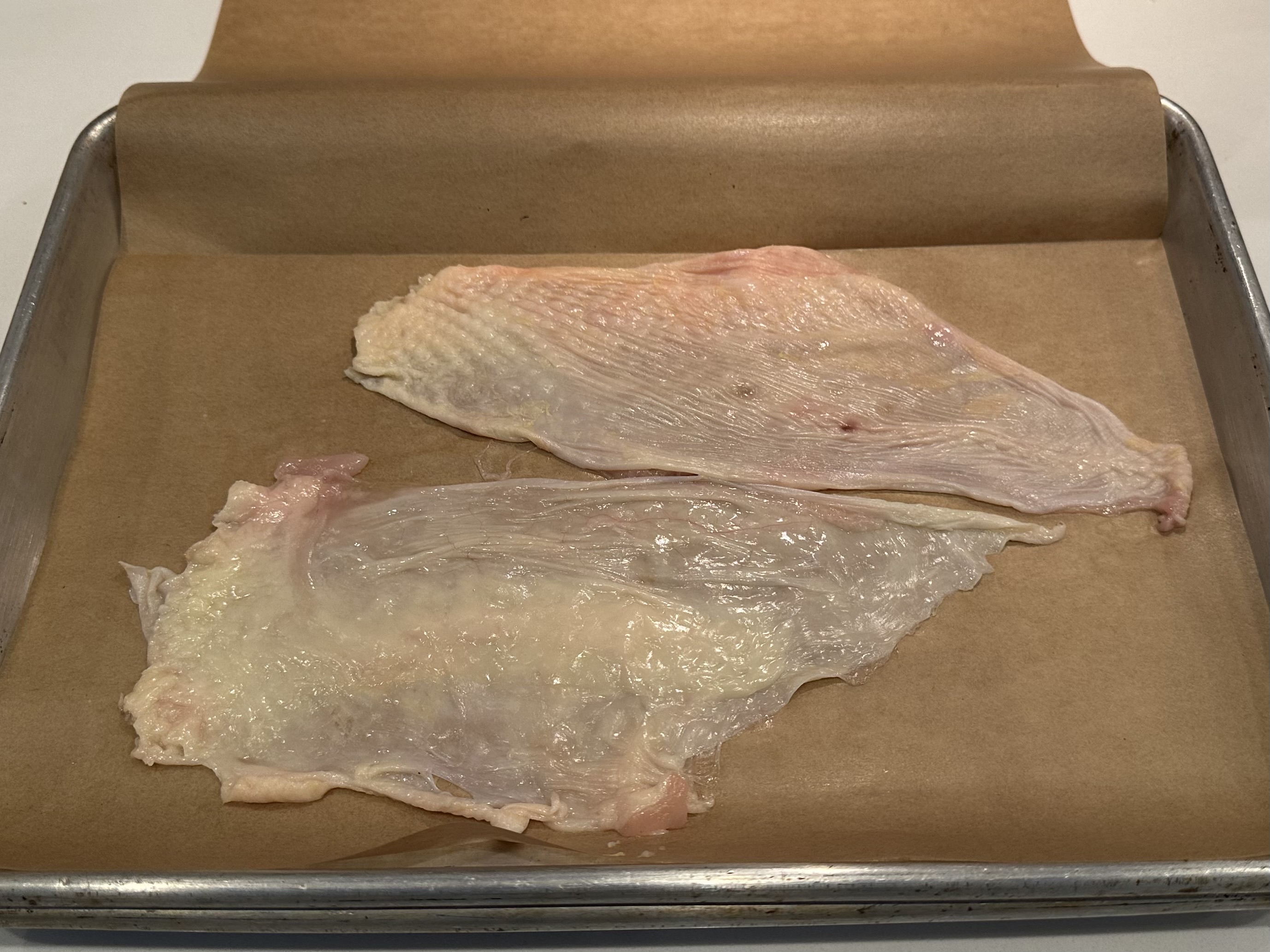
If you are like me and love crispy chicken skin, but are not a fan of the flabby bits, this method can do double duty cooking the skin along with the chicken. All you need is another pice of parchment and pans that will nest one on top of the other (they don’t have to be a perfect fit). 

Start cooking the chicken skin about half an hour before the chicken breast. Again, fold a piece of parchment in half. Using a knife, scrape away any large bits of fat from the underside of the skin and spread it out across the bottom half of the parchment.

Fold the top half over the skin and place the pan you will use later to cook the chicken breast on top of the parchment and place in the oven. When it is time to add the chicken breast, remove the top pan and check that the skin is most of the way to done. Close the parchment back over the skin, and add the chicken breast packet to the hot pan and return to the oven for both the complete cooking.

NOTE: you can substitute aluminum foil for parchment if none of the ingredients you are putting on the chicken contains acid. Acidic ingredients, like tomato paste or vinegar, don’t work well in direct contact with aluminum. 

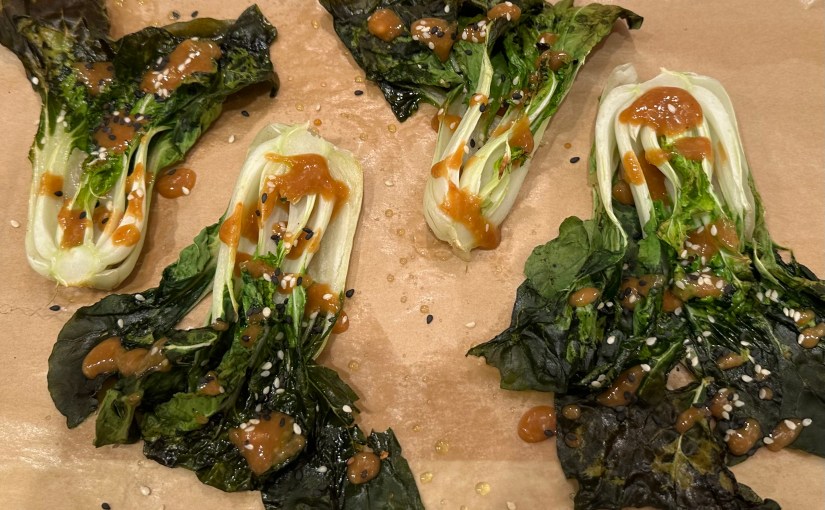
Roasted Baby Bok Choy with Miso-Honey Glaze

Roasting bok choy is a great way to get a crunchy texture at the leaf ends while keeping the bottom bulb section moist and delicious, and–unlike steaming–it actually intensifies the vegetables natural sweetness. This side dish is great with rice bowls and ramen, but can really go along with anything where you want a green veg with a touch of sweetness.

serves 2

INGREDIENTS

2 small heads of baby bok choy or 1 larger head

2 t. miso (I use white for this recipe but any miso you prefer will work)

1 t. honey

1 t. soy sauce

2 t. hot water

pinch up to ⅛ t. togarishi or cayenne pepper, if you want a bit of spice (optional)

1-2 t. neutral oil, like canola

sesame seeds for garnish, either black or white are fine (optional)

PREPARATION

  1. Preheat an oven (a toaster oven–if it is large enough–is fine) to 375°F.
  2. Divide the bok choy in half by cutting through the middle from bulb end to leaf end. If it is larger, you may want to divide it into four quarters.
  3. Carefully hold each bok choy head under running water to ensure there is no sand trapped where the leaves meet the bulb, but don’t let the water rip leaves off the head
  4. Drain as well as possible on a paper towel or kitchen towel. You won’t get it completely dry.
  5. Place the bok choy on a rimmed sheet pan and rub with oil, fanning out the leaves a bit if they are closely packed.
  6. Cook in the preheated oven for 10-20 minutes (depending on the size of the bok choy). It is cooked through when the bulb is tender when pierced with a knife end and the ends of the leaves are crisp.
  7. While the bok choy is roasting mix together in a small bowl using a fork the miso, honey, soy sauce, water and pepper (if using).
  8. As soon as the bok choy comes out of the oven, drizzle with the glaze and top with sesame seeds.

Sheet Pan Roasted Squash, Apple and Onion Soup

Roasting brings out the flavors in so many vegetables, but roasted vegetable soups can be laborious to prepare. This is a hearty, quick and really versatile week night soup. Best of all it requires only a sheet pan and a pot to come together. You can take this soup in any direction you’d like by changing the herb and/or adding spices like curry powder or chili powder. I took the idea and many of the ingredients from a recipe J. Kenji Lopez Alt published, but have changed it to make it quicker and, I think, even better in taste and texture.

Please feel free to leave a note if you come up with a combination of herbs or spices that you think is particularly good!

Serves 4

Ingredients:

1 medium butternut squash, peeled, seeded and cut into approx. 1½ ” cubes (feel free to buy squash at the market that is already peeled and cut up to speed the process)

1 large yellow onion peeled and cut into wedges, then roughly separated each into 2 to 3 pieces

2 leeks, white and only tenderest green part, washed thoroughly and sliced into half moons of 1″ or so (you can also just add more onion or substitute 2 shallots, peeled and cut in half, if you don’t have leeks)

4 cloves of garlic, peeled but left whole

4 slices of peeled fresh ginger (about ¼” to ⅓” think each)

1 peeled and cored apple (use any type you like)

3 medium carrots peeled and cut into 1″ chunks

2-3 tablespoons of olive oil

12 sage leaves (you can replace the sage with another herb like thyme or tarragon, if you prefer, or leave it out and add a curry spice or some heat through chili powder when pureeing the soup)

liberal sprinkling of salt and fresh ground black pepper

6 cups low-salt chicken stock (substitute water if you wish to keep this vegetarian)

chili crisp for serving, if you want a bit of spice (again, feel free to substitute anything that appeals to garnish the soup–scallions slices, pepitas, etc.)

Preparation:

  1. Preheat the oven to 350 degrees while you are cutting up the vegetables.
  2. Place all the vegetables on a sheet pan or in a large baking dish.
  3. Pour the olive oil over the veggies and toss with your hands or a large spoon to coat and to grease the pan.
  4. Roast the vegetables in the oven for 30 to 40 minutes (until the squash is browning at the edges and the onion is beginning to char).
  5. Transfer the entire contents of the sheet pan to a large pot.
  6. Add the chicken stock or water and bring to simmer over medium high heat. Simmer until all the vegetables are softened (20-30 minutes).
  7. If you have a stick blender, puree the soup right in the pot. If not, transfer contents in several batches to a blender to puree (make sure you remove the top cap and cover with a towel so the heat doesn’t cause the top to blow off).
  8. Taste to adjust salt and pepper.
  9. Serve garnished with chili crisp or any other topping you like.

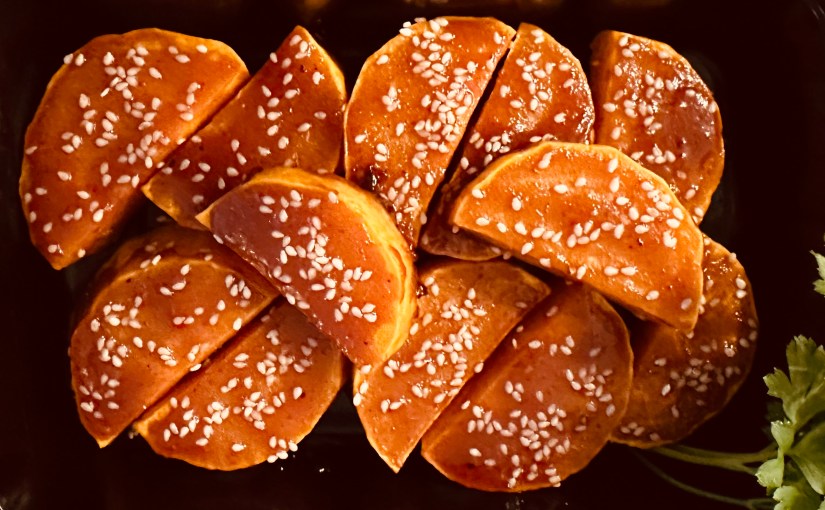
Roasted Butternut Squash with Hoisin and Ginger

This is a wonderful take on the fall classic of roasted butternut squash with maple syrup. The flavor gets a little kick from the addition of ginger and replacing the sweetener with hoisin. It comes together in just the time it takes to prepare the squash. While it is a lovely side dish, it could also become a main course if served over rice with any left over sauce.

serves 2-3 as a side dish

Ingredients:

1 small to medium size butternut squash (you can also use delicata squash sliced, acorn squash halved or any other winter squash you prefer)

1 T. canola or other neutral oil

Generous pinch of kosher or sea salt

¼ inch piece of ginger very finely minced (about a ½ t. but feel free to add more if you want a little more zing)

¼ cup hoisin sauce

2 t. soy sauce

1 t. rice wine vinegar

2 t. sesame seeds

Preparation:

  1. Preheat oven to 350 degrees.
  2. While oven is preheating, peel the butternut squash (not necessary if using delicata) , cut in half length-wise, scoop out the seeds and slice into ½ or ¾ inch slices (they will look like half moons and crescents).
  3. Place the squash and the oil in a bowl and toss to coat.
  4. Line a rimmed baking sheet (or other oven a safe pan) with parchment (or foil) to prevent sticking.
  5. Arrange the squash in a single layer on the baking pan, sprinkle with the salt, and place the pan in the pre-heated oven.
  6. While the squash begins to cook, make the sauce.
  7. Peel and very finely mince the ginger. Add the ginger to a small bowl, and then add the hoisin sauce, soy sauce, and rice wine vinegar. Mix very well.
  8. When the squash is just tender when a knife tip is inserted into it (20 -30 minutes depending on the thickness and freshness of the of the squash), remove from the oven and paint thickly with the hoisin-ginger sauce letting it drip down the sides (but not so generously extra sauce is pooling in the pan as it will burn). You will probably have a little sauce left over.
  9. Sprinkle generously with sesame seeds.
  10. Increase the heat in the oven to 375 degrees and return to the oven for 10 minutes or so until the squash is very tender and the sauce is just bubbling and beginning to caramelize just a little around the edges of the squash.
  11. Enjoy!

Broccoli and Mushrooms in Spicy Garlic Sauce

This recipe serves 2-3 people and is a very quick and easy weeknight meal. The most time consuming step is making rice to go with it. It works great with either long- or medium-grained rice and either white or brown. If you want to jazz up the meal a little serve it with a side of your favorite dumplings or with some fried tofu squares.

INGREDIENTS:

1 1/2 c. sliced shiitake or oyster mushrooms (if you don’t like mushrooms, you could substitute either thinly sliced pork or pea pods depending on whether you want to keep the dish vegetarian, but–if using meat– ¾ of a cup should do)

3 T., plus 1 t., neutral oil, such as canola, divided into 2 T., 1 T. and 1 t.

2 T. and 1 t. soy sauce, divided

1 ½- 2 c. broccoli florets (about half a typical head of broccoli), cut into bite-size pieces

¼ cup water

3-4 cloves of garlic, depending on size, finely minced

1 ½ t. Chinese black vinegar (if you have it), if not use any vinegar you have available including balsamic

1 ½ t. sugar or honey

½ t. toasted sesame oil (can be replaced with regular sesame oil, but increase to ¾ t.)

½ to 1 ½ t. chili garlic sauce (I have found these sauces vary greatly in the intensity of their heat so taste yours and add accordingly)

1 T. corn starch

3 T. water

Cooked rice to serve, and toasted sesame seeds and/or slcied scallions as garnish (optional)

PREPARATION:

  1. Heat 2 T. oil and 1 t. soy sauce in a fry pan.
  2. When oil is shimmering add the mushrooms and fry until nicely browned and the edges become crispy.
  3. Remove the mushrooms from the pan and add another 1 t. of oil.
  4. Add the broccoli florets and turn the heat to medium high in order to get some charred spots on the broccoli (2-3 minutes). Don’t let them burn.
  5. Reduce heat to medium low, add the water and cover to lightly steam the broccoli, removing it from the pan when it is just crisp tender (about 2-3 minutes). Almost all of the water should also be gone. If more than a spoonful remains, drain it from the pan.
  6. Add the final 1. T of oil to the pan and heat on low. Add the garlic and sauté for a minute or so until it is fragrant and it no longer smells raw.
  7. Add the vinegar, soy sauce, sugar/honey and toasted sesame oil. Stir to combine.
  8. Add the chili garlic sauce to taste.
  9. Combine the water and the corn starch until thoroughly mixed and add to pan, stirring constantly until the sauce thickens.
  10. Return the mushrooms and broccoli along with any liquid that has accumulated with them to the sauce and heat through.
  11. Taste and season with additional soy sauce and/or chili garlic sauce if needed.
  12. Serve over rice, garnishing with toasted sesame seeds and.or scallions if you wish.

Curried Cauliflower Soup

3-4 servings

This soup is both hearty and light at the same time, as well as being high in fiber and other nutrients. It also comes together very quickly for a weeknight supper. This recipe flavors the soup with curry spices, but the basic recipe is really flexible. You could substitute Spanish, Greek, or Middle Eastern spice mixtures and it would work equally well. I fried some shallots for a crispy topping but you could just as easily add toasted nuts, sliced scallions, or even a sprinkle of cheese–whatever catches your fancy.

Ingredients:

1 T. and 1 t. canola or vegetable oil

1 small onion, finely chopped

1 to 1 ½ t. finely chopped or grated ginger

2 cloves garlic, minced

1 T. curry powder (choose whatever is your favorite–I used half garam masala and half vindaloo)

½ t. cumin powder

1 ½ t. kosher salt

1 head of cauliflower (1½ to 2 lbs. before trimming)

¾ – 1 lb. russet or Yukon Gold potatoes (2-3 potatoes)

1 quart low sodium chicken stock (or water if you want this to be vegetarian)

2 C. water

1 t. white wine vinegar (or rice wine vinegar)

¼ c. whole milk (omit if you want the soup to be vegan)

Black pepper to taste

1 medium shallot

Preparation:

  1. Cut the cauliflower head into florets discarding leaves and the thickest part of the stem. Peel the potatoes and cut into 1 inch cubes.
  2. In a large heavy bottom pot or pan (large enough to hold at least 2 quarts), heat 1 T. of the oil over medium-low heat. Add the onion and ginger and sauté until the onion is softened (about 5 minutes). Add the garlic and continue to sauté for 1 minute more.
  3. Add the curry, cumin, and salt mixing well, and sauté until the mixture becomes very fragrant (about 2 minutes).
  4. Add the chicken stock, water, and vinegar to the pot along with the cauliflower and potatoes and increase heat to medium-high to bring it to a boil. Once it is boiling, reduce the heat and simmer the soup until the potatoes and cauliflower are both very tender (15 minutes or so, a little more if the vegetables pieces are larger).
  5. While the vegetables are cooking, peel and thinly slice the shallot.
  6. Heat the remaining 1 t. of oil in a small skillet over medium-high heat and fry the shallot, stirring often, until brown and crisp (do not go far from the pan as shallots can burn very quickly).
  7. Using a blender or stick blender, blend the soup until it is smooth. If you prefer to have some pieces of cauliflower for texture, remove them before blending. If using a regular blender return the soup to the pot (adding back in any cauliflower you removed), stir in the milk and add a good grinding of black pepper. Taste to adjust other seasonings.
  8. Serve topped with crispy shallots.

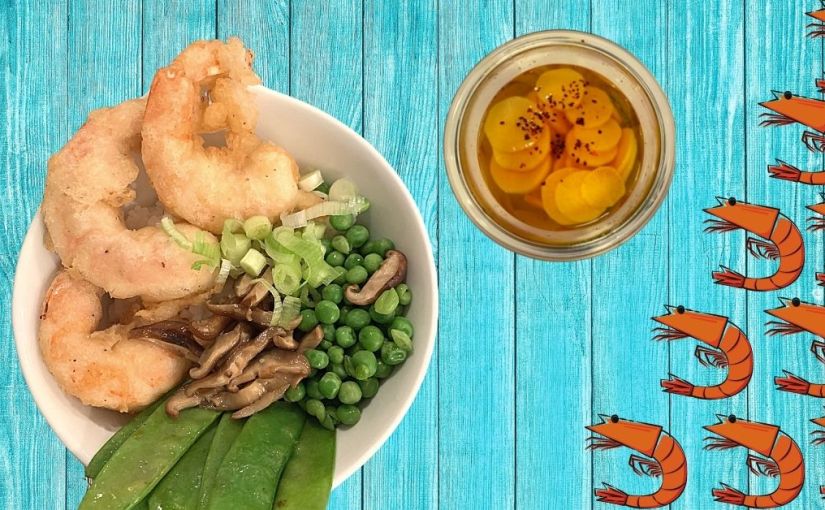
Fried Shrimp Rice Bowl

In his wonderful cookbook, Smoke and Pickles, Edward Lee includes recipes for a number of fabulous rice bowls: spicy pork with jicama and cilantro; and tuna with avocado, pork rinds, and jalapeno, to name just two. This is not as complex as the ones in his book, but it is also easier to pull together for a weeknight meal. I do think the flavors are good enough for company, though. Making the daikon pickle to go with it is certainly optional, but it is dead simple and adds a terrific layer of flavor to the dish.

Serves 2 but can be doubled, tripled, etc.

Ingredients:

For the rice bowl:

8 large shrimp (these should be from the 16-20 per pound size) shelled and deveined

6-8 shiitake mushrooms, depending on size

1 ½ t. neutral oil (safflower, canola, vegetable)

1-2 t. mirin (depending how sweet you want the mushrooms)

1 t. soy sauce

12-16 pea pods, tough strings removed

½ c. fresh or frozen peas, thawed or blanched in hot water, if fresh

2 scallions, white and tender green, sliced

½ c. all purpose flour

2 T. rice flour (only if you have it, you can also substitute 1 T. corn starch and 1 T. all purpose flour, or just use all purpose flour)

1 c. water (or you can use beer, if you like)

salt and pepper

2 cups cooked white rice (you can use medium grain rice as we usually do, or long grain if you prefer)

2 T. mayonnaise (any brand you like is fine)

2 T. Gojuchang (if you don’t have Gojuchang, you can substitute sriracha or hot sauce but decrease to 1 to 1 ½ T. and add 1 t. of honey)

Furikake (only if you have it) to taste

For the daikon pickle:

1 medium size daikon radish (available at Whole Foods and at Asian markets)

1 c. rice wine vinegar

½ t. kosher salt

2 t. sugar

2 t. chili flake (if you have it) or similar hot flaked spice or ½ t. crushed red pepper

1 t. turmeric

Preparation:

Daikon Pickle: If you are making the daikon pickle, this should be done first and left to sit for a bit (a couple of hours is good, but even half an hour will do).

  1. Peel and thinly slice the daikon.
  2. Combine the vinegar, salt, sugar, chili flake/red pepper and the turmeric in either a pan if you are heating it on the stove or a heat proof container (like a Pyrex measuring cup or Ball jar) if heating in the microwave. Gently heat the mixture to just below simmering, stirring occasionally until the sugar and salt have largely dissolved. (Note: if heating in the microwave, as I usually do, make sure there is a loose cover over the container in case it gets too hot and splatters).
  3. If heated in a pan, transfer the vinegar brine to a glass or ceramic container.
  4. Immediately, add the daikon slices and submerge (or stir/shake).
  5. Leave on the counter until ready to use (if within a few hours) or refrigerate, if not using for a day or two.

Rice Bowl:

  1. Prepare the rice and keep warm (easiest using a rice cooker, but it is fine to leave it covered in a pan).
  2. While the rice is cooking, prep the other items and get the shrimp out of the refrigerator so that they can warm a little.
  3. For the mushrooms, remove the stem and clean and slice the caps to about ¼” thick.
  4. Heat 1 t. oil, mirin and soy sauce in a small fry or sauté pan over medium-low heat.
  5. Add the mushrooms slices and stir to coat. Allow the mushroom to cook until they give up most of their liquid.
  6. Allow them to cook for a few more minutes until the edges begin to brown, but watch the heat so the mirin mixture doesn’t start to burn. (It will make them bitter.)
  7. While the mushrooms are cooking, wash and remove any tough strings from the pea pods or snap peas.
  8. Remove the mushrooms from the pan and set aside.
  9. Wipe out the pan with a paper towel, and add the final ½ t. oil to the pan. Heat to medium.
  10. Dry the pea pods/snap peas with a paper towel and then add to pan. Stir until they begin to brighten in color and look just cooked (about 1 to 2 minutes). Remove from the pan and set aside.
  11. If using frozen peas, microwave briefly with a little bit of water to heat them through. If using fresh peas, bring a small pot of water to a boil, add the peas and cook for 1 to 2 minutes. In either case, thoroughly drain the peas.
  12. Slice the scallions, if that is not already done.
  13. Combine the gojuchang and the mayonnaise in a small bowl and set aside.
  14. In a shallow bowl, combine the all purpose flour with the rice flour, if using, and add the water or beer, stirring thoroughly until the batter is smooth.
  15. In a deep pot (a pasta pot works well to avoid splatters), add oil to reach to about ¾ of an inch. The amount will vary depending on the diameter of the pot but is likely to be about 3 cups. (NOTE: If you strain out any bits of batter or shrimp, the oil can be saved in the refrigerator and used to fry other seafood or fish for up to about one month.)
  16. Heat the oil over medium to medium-high heat until it appears to shimmer. (NOTE: if you want to know if the oil is hot enough, throw in a small piece of bread–any kind–and count to ten to see if it fully fries to golden. If it doesn’t, the oil is not hot enough. If it burns, the oil is too hot.)
  17. When the oil is hot, dredge the shrimp batter and drop into the hot oil cooking a few at a time so as not to crowd the pan or have the oil cook too much. As soon as the batter is golden (only about 2-3 minutes) remove the shrimp to a paper towel lined plate. Continue until all 8 shrimp are cooked.
  18. To assemble the bowl, begin with rice, nestle the shrimp into the warm rice and add the mushrooms, pea pods/snap peas, peas, and scallions. Put slices of daikon pickle in a small bowl and pass, along with the gojuchang mayo, and–of course–soy sauce at the table.
Linguine with Mussels, Herbs and Wine

This is a quick and simple dish that packs in a lot of flavor, from the brine of the mussels to the floral quality of the herbs and the salinity of the wine. The herbs bring a lot to this dish and so it is worth using fresh if you can get them (at a minimum try to get at least one fresh). While it is important to have a mix of green herbs, you can easily substitute ones you like best. In addition to the three listed below, parsley, cilantro, tarragon, and even scallions work fine.

Serves 2-3

Ingredients:

2 lbs. mussels (preferably small Maine mussels, Whole Foods often carried Moosabecs which are tasty and usually well-cleaned) NOTE: The mussels should be stored in a bowl sitting on a small bag of ice in the refrigerator until ready to use. You can ask the market to give you a bag of ice when you get the mussels.

2 T. olive oil

2 garlic cloves, finely minced

1 ½ T. fresh thyme, chopped (or 1 ½ t. dried thyme)

1-2 T. fresh basil (or 1-2 t. dried)

4-5 chives blades snipped or chopped into small pieces

¾ c. dry white wine (for a slightly different take, you can substitute beer)

2 T. unsalted butter

freshly ground pepper

freshly grated parmigiano or pecorino cheese, best quality you can find

½ to ⅔ lb.of dried linguine

Preparation:

  1. Wash the exterior of the mussels well and pull off any beards (fibers coming out from where the shell closes) and return to the bowl in the refrigerator. Throw away any mussels that do not fully close within a few seconds when tapped on the counter as they are already dead and should not be eaten.
  2. Bring a well-salted pot of water to a boil for the pasta.
  3. While the water is heating, finely mince the garlic, chop the fresh thyme (if using), and snip or cut the chives.
  4. Place a deep pot or large fry pan with a tight fitting lid over medium low heat. Add the olive oil and then the garlic. Allow the garlic to sauté for a minute or two, but do not let it brown.
  5. When the pasta water reaches a rolling boil, add the linguine and cook for the recommended amount of time on the package (usually 10-12 minutes).
  6. Add the white wine to the pot/fry pan and increase the heat to medium-high. Allow to come up to a simmer to cook off some of the alcohol.
  7. Add the mussels to the wine and garlic and immediately cover the pot/pan.
  8. While the mussels are cooking, roll up and thinly slice the basil leaves (chiffonade). This is done after the other herbs because the leaves will begin to discolor soon after they are cut.
  9. Cook the mussels for 3-5 minutes until all (or almost all) have opened. Immediately turn off and remove the pan from the heat.
  10. Add the butter and the herbs to the mussels and toss well. Discard any mussels that did not open.
  11. When the pasta is cooked, drain well, and divide among serving bowls.
  12. Top the pasta with mussels using tongs, leaving the bulk of the sauce still in the pot/pan.
  13. Once all the mussels have been removed, carefully tilt the pan and using a ladle or spoon pour the sauce over the mussels and pasta, leaving behind any residual grit (there shouldn’t be much).
  14. Top the dish with freshly ground pepper and grated cheese to taste. (The cheese will melt into the sauce and enrich it.)

Barbecued Beans

These beans are a cross between Texas style barbecued beans and New England baked beans. They don’t have the ground beef typical of Texas, but are spicier and less sweet than the New England tradition. The beans can be made in either a vegan or a carnivore’s version. They are wonderful as a side dish to almost any cookout food, but have enough depth of flavor to serve as the main attraction with additions like crusty bread, avocado, a fried egg, or even just tossed with some leftover brown rice. They also reheat and freeze beautifully so it is worth making a big batch.

Ingredients:

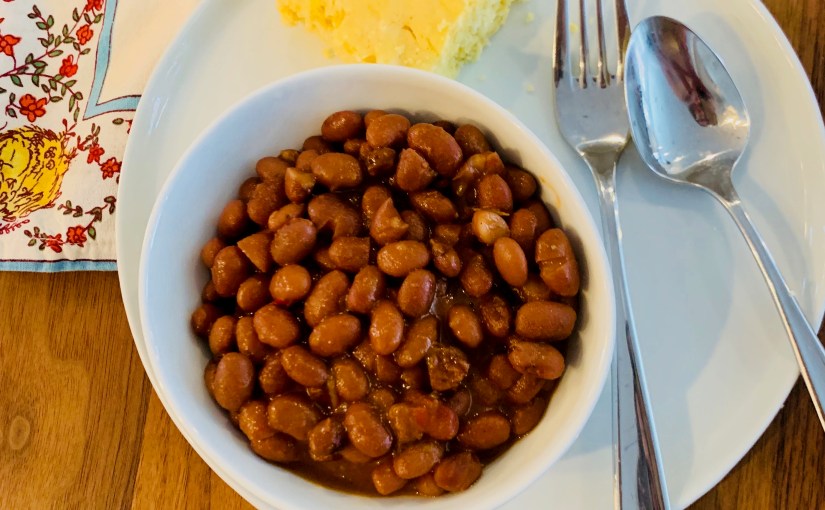
1 lb. best quality pinto or similar bean (in the ones pictured I used Rancho Gordo‘s King City Pinks), soaked for a few hours or overnight

1 or 2 pieces of thick cut bacon (or 1-2 oz. or guanciale, if you weirdly happen to have it as I did) cut into medium dice (about ⅓”) – OPTIONAL

1 T. of neutral oil (safflower, canola, or vegetable) NOTE: Use 2 T. oil if not using bacon

1 small or ½ large yellow onion, diced

3 cloves of garlic, minced

1 small or ½ large green pepper, finely diced

1 (or more) jalapeño peppers, finely diced (feel free to substitute Fresno or other hotter chiles if you prefer more heat)

2 cups low sodium chicken broth

1-3 cups water (amount needed to ensure that beans are submerged in at least 1 ½ inches in liquid)

¼ cup of ketchup

1-2 T. mustard (Coleman’s English if you have it, but you can use anything you have on hand)

2 T. dark brown sugar

1 T. apple cider vinegar (feel free to substitute any vinegar you like if you don’t have apple cider)

1 T. hot sauce

2 t. smoked paprika or your favorite chili powder

salt to taste

PREPARATION:

  1. Soak the beans, if you have time, for at least 3 hours or overnight. If you don’t remember to do this, don’t worry, it will just take longer for the beans to cook and they will probably need added liquid (hot water) during cooking.
  2. Drain the beans.
  3. In a large oven-proof pot or pan big enough to hold the whole dish, add the oil and the bacon, if using. If using bacon, cook slowly over medium low heat to render as much fat as possible from the meat. Remove the diced pieces from the pan when they are cooked. If not using meat, heat the oil over medium heat.
  4. Add the diced onions to the pan and sauté until just starting to turn opaque.
  5. Add the garlic, green pepper, and jalapeño and sauté for a minute or so.
  6. Add the chicken stock, beans, and water to cover.
  7. Bring to a simmer and cook covered for 45 minutes on the stove top on low to medium heat. Just high enough to keep the beans bubbling and so they begin to soften. Add hot water if the top begins to look dry.
  8. Preheat the oven to 300° F.
  9. Add all the other ingredients to the pot, except the salt: ketchup, mustard, brown sugar, vinegar, hot sauce and smoked paprika or chili powder, as well as the reserved bacon, if using, and stir gently to distribute throughout.
  10. Cover the pot and bake for 2 ½ hours. Check for doneness and add salt at this point (whether or not they are fully done). If the beans are fully cooked and have absorbed the flavors, you can take them out and let them rest for at least 15 minutes (or longer if you want) before serving. If they are a little too liquid for your taste, remove the top and bake uncovered for another 15-30 minutes. If they are not fully cooked when you check at 2 ½ hours, return to the oven and check every 20 minutes or so until they are done. (Depending on their age and if they were soaked before cooking, beans can take up to 4 hours in the oven).

This is also a great recipe to change up the flavorings, heat and sweetness level to suit your own taste!